
Your localization plan says Persian. Your translation provider's quote says Farsi. A colleague working with Afghan audiences mentions Dari. All three names are connected but not interchangeable, and choosing the wrong one can put your content in front of the wrong audience.
The audience at stake is bigger than many businesses realize.
Persian has about 62 million native speakers, and more than 50 million people speak it as a second language. Here's how the names fit together and how to choose the right variety for your project.
Persian and Farsi are the same language
Persian is the English name for the language. Farsi is what speakers in Iran call it, the same way German speakers call their language Deutsch. Britannica puts it simply: the language is called Fārsī by native speakers.
So when a translation quote says "Farsi" and your style guide says "Persian," you're looking at one language with two labels. But Persian is broader than Iran: it's the umbrella for three related varieties—Farsi in Iran, Dari in Afghanistan, and Tajik in Tajikistan. The label matters less than the variety, which is where real differences begin.
Farsi, Dari, and Tajik are three branches of one language
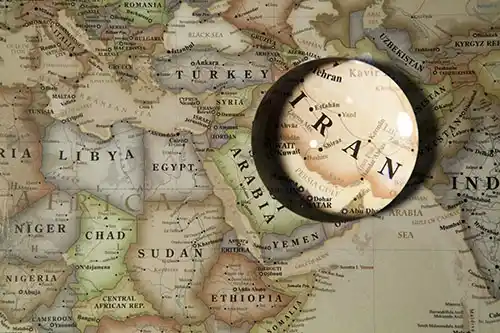
Persian is an official language in three countries, and each country has its own name and standard for it. Iran calls it Farsi, Afghanistan calls its variety Dari, and Tajikistan calls its variety Tajik. All three are official languages of their respective countries.
In conversation, educated speakers of the three varieties can largely understand each other. Decades of Soviet influence brought Russian vocabulary into Tajik, though Tajik and Dari remain closer to each other than either is to the Farsi spoken in Iran.
Writing is where the varieties truly split. Farsi and Dari use the Perso-Arabic script, written right to left. Tajik uses the Cyrillic alphabet, the same script as Russian. A document translated into Farsi is unreadable to a Tajik reader who only knows Cyrillic.
The practical rule mirrors the choice between Simplified and Traditional Chinese: match the variety to the geography. Targeting Iran means Farsi. Targeting Afghanistan means Dari. Targeting Tajikistan means Tajik, in a different alphabet entirely.
Which languages do people speak in Iran?
Iran's population reached 91.6 million in 2024, and the country is far from monolingual. Farsi is the official language and the language of government, media, and education. But slightly more than half the population speaks a dialect of Persian natively.
Roughly one-fourth of Iranians speak Turkic languages, mostly Azerbaijani, and a smaller share speaks Kurdish. Communities across the country also speak Luri, Gilaki, Mazandarani, Arabic, and Balochi.
For most products and campaigns, Farsi covers the whole country because nearly everyone reads and conducts business in it. If your audience is a specific region or community, ask your translation provider whether another language should join the plan. Knowing who actually uses your product is the first step in any localization strategy.
Sanctions shape where the opportunity actually is
Any plan for reaching Iranian customers has to start with a hard constraint. The United States has maintained comprehensive sanctions on Iran for decades, and broad UN sanctions snapped back into force on September 28, 2025. Lawful trade is narrow: US exports to Iran totaled just $90.2 million in 2024.
For most US organizations, the largest reachable Persian-speaking audience lives in their own service area. About 449,100 people in the United States speak Persian at home, including 34,640 Dari speakers, according to Census Bureau data released in June 2025. Hospitals, schools, courts, and government agencies serving these communities need Farsi and Dari translation and interpretation every day.
Persian-speaking communities in Canada and Europe add to that audience, and Tajikistan isn't under the US embargo. If your business is exploring Iran-related trade directly, involve sanctions counsel first and lean on trade resources like the International Trade Association of Greater Chicago for current guidance.
How to choose the right Persian variety
The decision comes down to who your readers are and where they live.
Choose Farsi when:
- Your audience is in Iran or the Iranian diaspora in the US, Canada, or Europe
- You're serving Persian-speaking patients, students, or customers in the United States
Choose Dari when:
-
Your audience is in Afghanistan
- You're supporting Afghan communities through resettlement, education, healthcare, or government services
Choose Tajik when:
-
Your audience is in Tajikistan
- You need Persian in the Cyrillic script, since Farsi files can't be reused as-is
Whichever variety you choose, plan for the script. Farsi and Dari run right to left, which affects layout, fonts, and design in ways that desktop publishing for translation has to account for. A translation provider that handles document translation in Persian varieties can manage the language and formatting together, so your content reaches the right readers and looks the way it should.